Dongguan to Hong Kong Multi-Destination Distribution
Four pallets, one Hong Kong warehouse, three outbound flows — handled end to end by a single provider
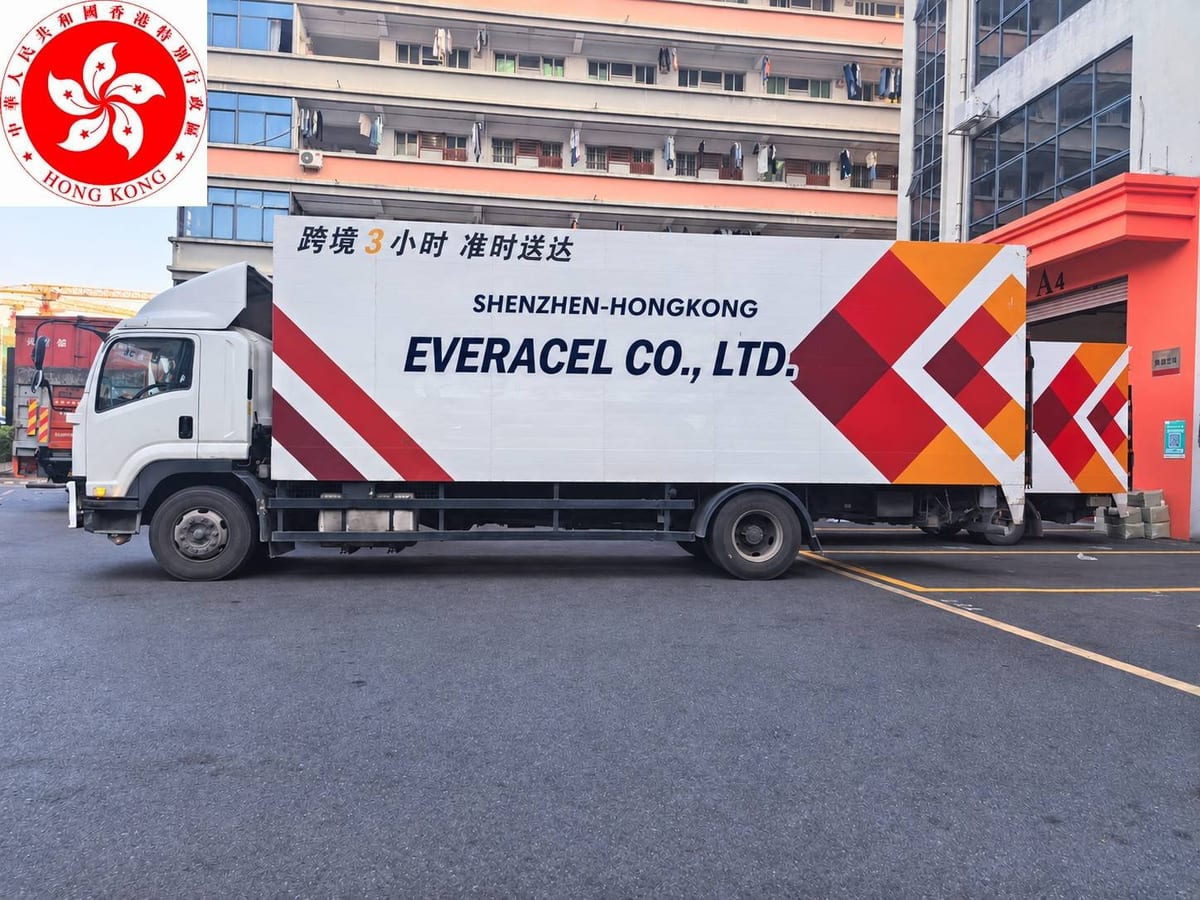
Four pallets, three destinations, and one warehouse in the middle. The shipment is too small for any single flow to justify its own setup, yet it needs import storage, transshipment to the United States, and local delivery at the same time. This is how all three were handled inside one closed loop, without splitting the cargo across three vendors.
At a Glance
| Item | Detail |
|---|---|
| Cargo | Four standard pallets |
| Origin | Dongguan factory, Guangdong |
| Border crossing | Dedicated China–Hong Kong truck with two-plate vehicle status, no co-loading and no mid-route transfer |
| Hub | Partner warehouse in Hong Kong, with ambient and temperature-controlled storage |
| Onward flows | LCL consolidation to the US, customer pickup in Hong Kong, and storage pending further instructions |
The Brief: Four Pallets, Three Destinations
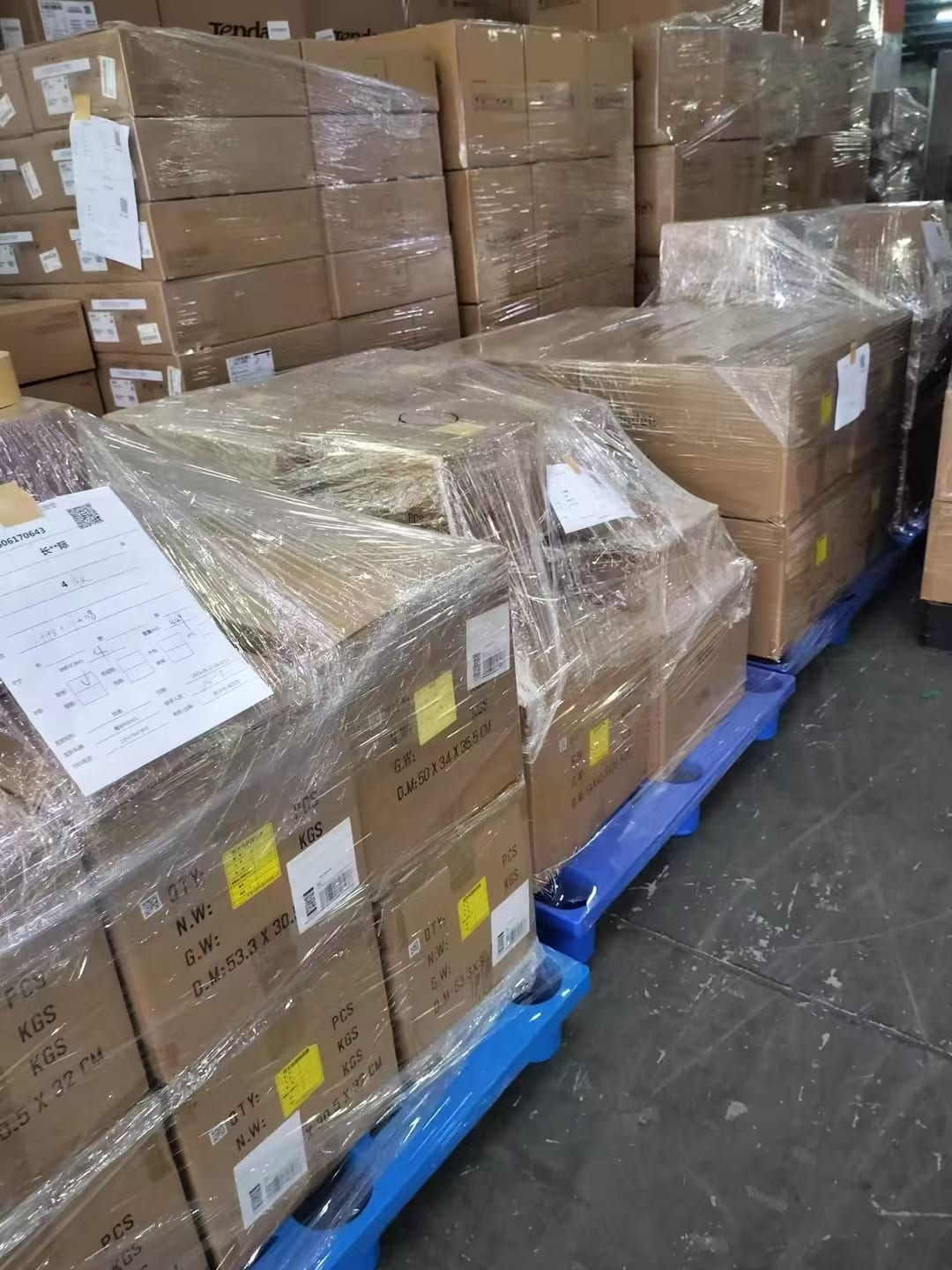
The instruction was easy to state and awkward to execute: move four pallets from a Dongguan factory to Hong Kong, keep them under one roof, then let them leave in three different directions on three different schedules.
| Pallet | Destination | Operation |
|---|---|---|
| Pallet 1 | United States | LCL ocean consolidation |
| Pallet 2 | Hong Kong local | Customer pickup at the warehouse |
| Pallets 3–4 | Hong Kong | Storage pending further instructions |
Why Three Vendors Would Cost More
- Too small to stand alone: four pallets do not justify a dedicated export container, a standalone customs arrangement, or a one-off truck booking for each flow.
- Three flows, three handovers: import storage, US-bound consolidation, and local delivery normally sit with three different providers, each opening its own file and its own invoice.
- Every handover duplicates cost: documentation, inbound handling, and cross-border trucking are charged again at each boundary, and no single party can see the whole inventory.
Phase 1: Dongguan Factory to the Hong Kong Warehouse
Step 1 — Pickup at the Dongguan factory
A China–Hong Kong ton truck is dispatched to the factory. The four pallets are loaded as standard pallets, and piece count, packaging, and shipping marks are checked before the truck is sealed.
Step 2 — Export pre-declaration
The export declaration is filed before the truck reaches the boundary. Product description, HS code, and declaration elements are reviewed in advance to avoid a port hold. Normal clearance at the Dongguan–Hong Kong land boundary is same-day, and some shipments clear within hours.
Step 3 — Dedicated cross-border truck
A two-plate China–Hong Kong vehicle carries the cargo, with no co-loading and no mid-route transfer. Its GPS position remains visible throughout the crossing.
Step 4 — Hong Kong import declaration
The import declaration is completed when the truck reaches the Hong Kong boundary. Hong Kong is a free port: most goods are duty-free, declarations are electronic, and release is quick.
Step 5 — Receipt at the Hong Kong warehouse
The pallets are checked in and put away. Ambient and temperature-controlled storage are both available, alongside real-time stock reconciliation and value-added work such as labeling, sorting, and reinforcement.
Phase 2: Three Flows Out of One Warehouse
Step 6 — Pallet 1: LCL consolidation to the US
One pallet is picked from stock and booked onto the nearest US-bound LCL sailing. Hong Kong’s consolidation network runs frequent departures, and the warehouse completes the export declaration and the container handover.
Step 7 — Pallet 2: Customer pickup in Hong Kong
The customer is notified and the pallet is staged in the dispatch area. Piece count is checked on arrival and signed for, and an inspection before signing can be arranged.
Step 8 — Pallets 3–4: Storage in Hong Kong
The remaining two pallets stay in the warehouse awaiting instructions. Labeling, sorting, and repacking can be carried out while they wait, and they are released once the downstream order is confirmed.
One Provider vs. Three Vendors
| Item | Split across three vendors | One closed-loop provider |
|---|---|---|
| Hong Kong inbound | Three receipts, three document sets | One receipt, one shared ledger |
| Cross-border trucking | Up to three China–Hong Kong trips | One dedicated trip |
| Storage billing | Three separate minimum charges | One consolidated charge, per pallet per day |
| Communication | Three counterparts | One account owner from pickup to release |
The saving is not only in rates. Each additional provider needs its own inbound receipt, its own document set, and its own truck movement. On a four-pallet shipment those fixed costs dominate the invoice, which is why consolidation matters more here than the freight rate itself.
When This Model Fits
- Cargo is below a full container but still needs distribution in Hong Kong.
- Part of the shipment is transshipped to a third country, part is delivered locally, and part is held for sale.
- Hong Kong should work as a buffer node instead of a new direct shipment from the mainland for every order.
- Inventory visibility matters: the customer needs to know which pallet is where, at any time.
The Result
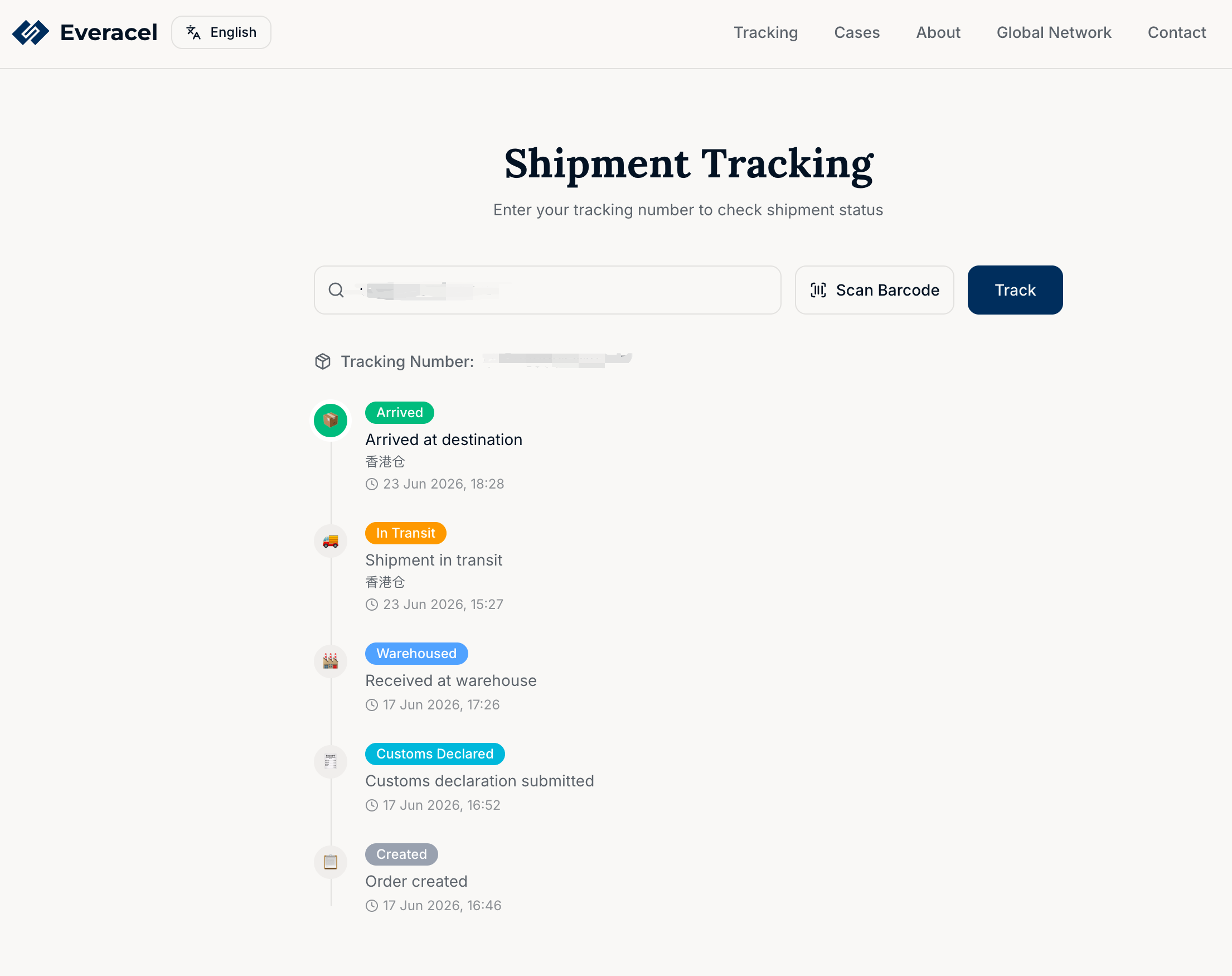
Four pallets left Dongguan, entered Hong Kong once, and were split three ways without a second inbound receipt or a second truck. One provider owned every handover from factory pickup to US LCL booking, local pickup, and storage release, and the customer could follow each pallet against a single ledger.
Planning a multi-destination shipment through Hong Kong?
Send us your pallet count, destinations, and timing. We will map the flows into one Hong Kong warehouse and quote storage, cross-border trucking, and LCL separately — on one invoice.
 WeChat

Scan to add on WeChat
 WhatsApp

Scan to chat on WhatsApp
 LINE

Scan to add on LINE
Note: Photos are from the actual shipment. Identifying details have been redacted for client privacy.