Oversized Cargo to Remote Fukuoka
A door-to-door personal import breakthrough — for a foreign consignee not residing in Japan
The client needed to move a single piece of equipment — over 2.5 m on one side, weighing close to 400 kg — from China to a remote area of Fukuoka Prefecture, Japan. The consignee was a foreign individual not currently residing in Japan (no Japanese residence status, no fixed address). The ask was deceptively simple: fully cleared, duty-paid, delivered to the door. This case study walks through why the conventional playbook breaks down, and how a “buy-name import” express line solved it for about 40% less than the standard personal-import alternative.
Client & Cargo Profile
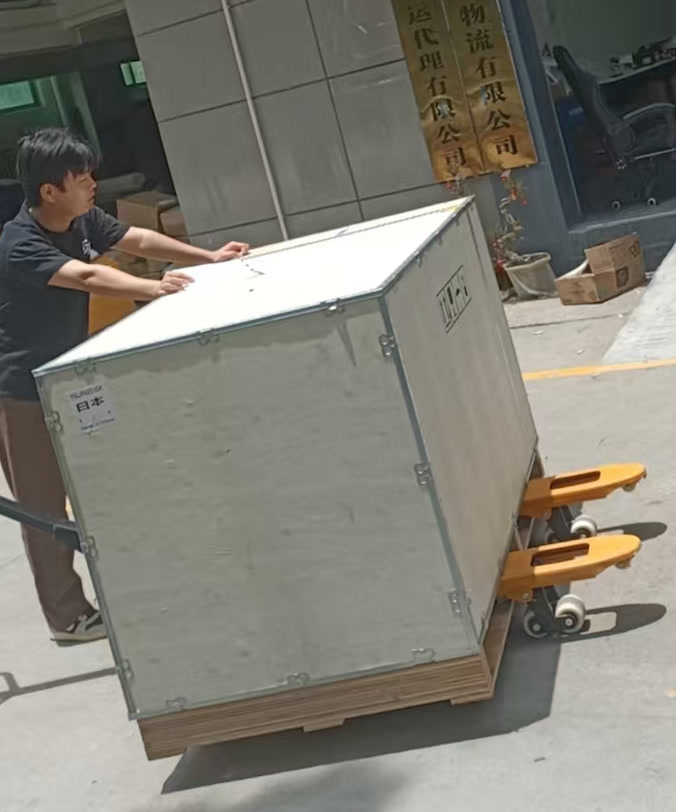
- Cargo: a single oversized piece of equipment — over 2.5 m on one side, close to 400 kg.
- Origin: China. Destination: a remote area of Fukuoka Prefecture, Japan.
- Consignee: a foreign individual not residing in Japan — no Japanese residence status, no fixed address, and no corporate import entity.
- Requirement: fully cleared, duty-paid, door-to-door (DDP-style).
One Shipment, Three Unusual Problems
Most freight forwarders quietly decline this kind of request. Three factors stack on top of each other:
- Oversized: a single piece this large eats container space inefficiently, so per-CBM margin collapses on standard consolidation.
- Remote destination: in-Japan domestic delivery cost to outlying Fukuoka is high, and many last-mile carriers will not even quote.
- Personal + non-resident foreigner consignee: the consignee qualifies for neither Japan's simplified personal-import clearance (which presumes a domestic resident) nor for corporate import (no company entity). The standard clearance paths simply do not apply.
Option A — Personal Import via Traditional LCL
The first instinct is to ship LCL to the nearest port (Hakata) and file the import declaration in the consignee's personal name.
- Operational blocker: because the consignee is not physically in Japan, Japan Customs has a very high probability of refusing release on a personal-name declaration.
- Estimated cost (door-to-door): ~RMB 12,800, including the usual surcharges — but with no guarantee of clearance.
- Estimated transit: 18–22 days, with material uncertainty at the clearance and last-mile stages.
Option B — “Buy-Name Import” Express Line (Chosen)
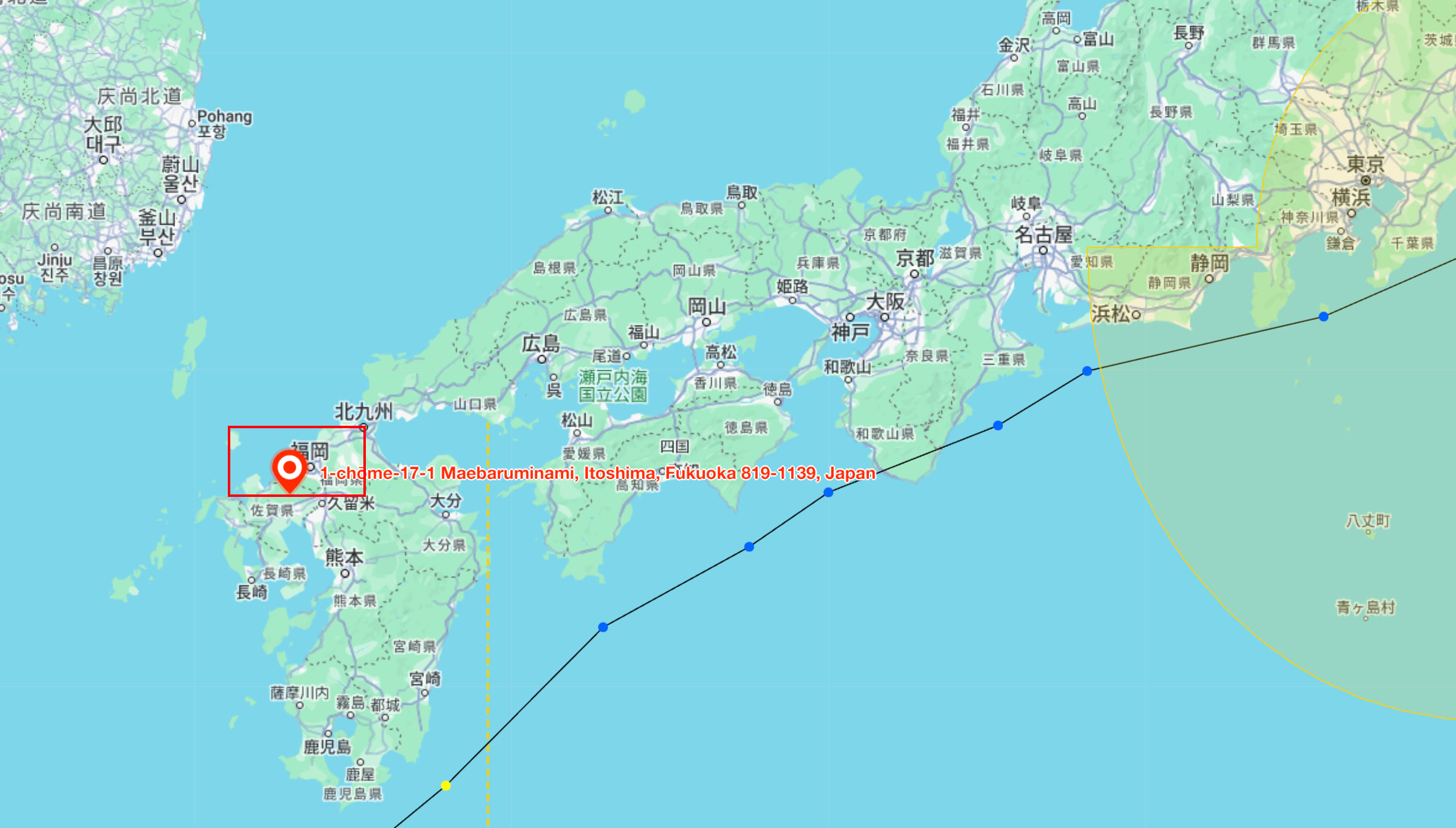
Instead of clearing the shipment in the consignee's name, we route it through our Japan partner's express line and clear import in the name of a Japan-based importer of record (a structure commonly called “buy-name import”). The cargo is consolidated to Osaka, then trucked under a specialized last-mile arrangement to the remote area of Fukuoka.
What the all-in price covers
- China-side export declaration
- Japan import clearance under a Japanese importer of record (compliant, no personal-name risk)
- Ocean freight
- Specialized vehicle for last-mile into the remote Fukuoka area
- Oversize transport permit
- Forklift unloading at the door
No surprise invoices to the consignee at any point along the way.
The numbers
- Door-to-door cost: ~RMB 9,700 — roughly 40% lower than the traditional LCL personal-import path.
- Transit: 12–15 days, stable and predictable.
- Clearance risk: eliminated — declaration is made by a compliant Japanese importer of record, not by an absent individual.
Execution Timeline
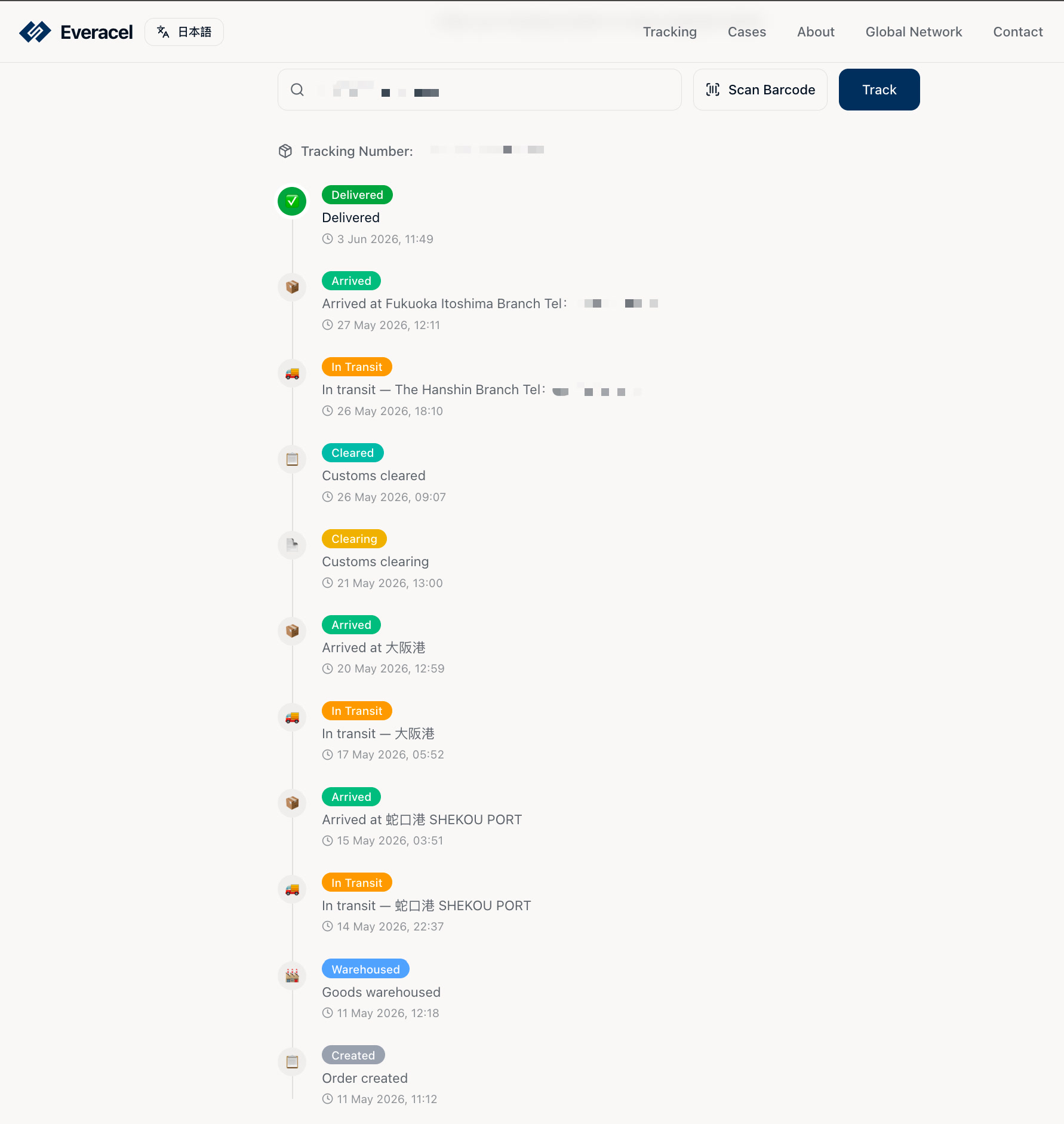
Actual tracking record from the shipment — visible status from warehouse-in at origin (Shekou Port), through Osaka transit and customs clearance, to final delivery at the consignee's door in Fukuoka Itoshima.
Client Feedback
“At first I was worried that an individual couldn't import something this oversized — especially since I'm not even in Japan. The second option ended up nearly 40% cheaper, and the shipment actually arrived at the front door. I didn't fly to Japan, I didn't ask a friend to receive on my behalf. Very professional.”
Key Takeaways
- Personal consignee + remote Japan + oversized cargo: the traditional LCL personal-import route is rarely viable. An express line with a Japanese importer of record is the path that is both compliant and cost-efficient.
- “Door-to-door” only counts if the door part is real: for remote-area Japan delivery, confirm the last-mile vehicle type, oversize permits, and unloading gear (forklift / crane) in advance — otherwise the goods may simply be dropped at the roadside instead of placed inside.
- Lower price does not mean less service: in this case the cheaper option included more services (importer of record, special vehicle, oversize permit, forklift). That's the cost-and-efficiency dividend of a consolidated express line running a high-frequency route.
Have a Hard-to-Quote Shipment to Japan?
Send us the dimensions, weight, and destination address — we'll come back with a compliant door-to-door plan, including remote-area last-mile, oversize permits, and import-of-record structure.
 WeChat
Scan to add on WeChat
 WhatsApp
Scan to chat on WhatsApp
 LINE
LINE
Scan to add on LINE
Note: Photos are from the actual shipment. Identifying details have been redacted for client privacy. All transport complies with relevant international maritime safety standards and import/export regulations.